
Former Inter-Services Intelligence chief Ahmed Shuja Pasha has admitted that the deadly Haqqani network was created by it and America's Central Intelligence Agency and claimed that the insurgent group's chief Jalaluddin Haqqani had "in fact been invited to the White House by President (Ronald) Reagan".

Voicing his frustration over the double game played by the Inter-Services Intelligence in the war against terror after 9/11, a former central intelligence agency chief has said that "duplicitous" is a gentler way to describe the notorious Pakistani spy agency, which has close links with terror groups.
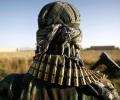
Starting with 10 terror modules in 2009, the Jamaat-ul-Mujahideen Bangladesh today has more than 50 units across West Bengal, reveal investigative officials.

There are a lot of very bad men out there. And Syed Asif Ibrahim is the best officer to deal with them. Aditi Phadnis reports

'Underwear bomb' creator Ibrahim Hassan al-Asiri, perhaps the best bomb maker in the world, has been the most high-profile recruit of the Islamic State. And the ability of his bombs to go unchecked through the most stringent security setups has left the US and UK very worried. Vicky Nanjappa reports.

'It is only when Beijing sees a country with an infirm political will such as India that it acts up as the PLA has done in eastern Ladakh.'

Most of the victims of the air strike on the houses at the foothills of Damadola village, about 25 km northeast of Bajur regional headquarters, Khaar, were women and children.


The Looming Tower reveals the bitter CIA-FBI turf battles that led to the worst terrorist attack in America's history.
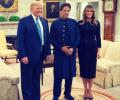
'Trump's new discovery is that Pakistan and its army are virtually god's gift to mankind.' 'They are required to facilitate a relatively orderly American exit from Afghanistan,' points out Ambassador G Parthasarathy, who served as India's high commissioner to Pakistan.

'Pakistan has been successful in convincing the rest of the world that the Pakistani nuclear terrorists are meant to target only India. This is myopia at its worst,' says Colonel Anil A Athale (retd).
'Why not ask for a change of leadership in Qatar, Bahrain or Saudi Arabia? Is there a constitution in Saudi Arabia? Are there elections in Saudi Arabia? Why no talk of democracy in these countries?' 'America said change the leader now, but is now ignoring the feelings of the Syrian moderate majority. Is that democracy,' asks H E Dr Riad Abbas, Syrian ambassador to India, in an interview to Cleo Paskal.
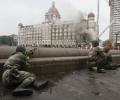
Through its early days to the 1980s, Pakistan sought to expand its sphere of Islamic influence through Afghanistan to Central Asia and got Pakistani citizens recruited in the Afghan government institutions in the 1990s when the Taliban were power. Now, it is looking eastward through India to Bangladesh and Myanmar to establish an imaginary caliphate.

'I believe one of the most critical issues is the common threat we face from Islamist radicals and the continuing and unimpaired financing of Al Qaeda, the 'D' Company, the Haqqani network, the LeT and the Jaish-e-Muhammed.'

What India has failed to acknowledge is that sub-conventional war is the name of the game and irregular forces have emerged with greater strategic value over conventional and even nuclear forces, and reliance purely on conventional force and diplomacy is grossly inadequate, says Lt Gen Prakash Katoch (retired).

As far as India is concerned, the danger is the potential of the IS to create mischief rather than its actual capability as of now, says Rajiv Kumar
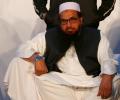
The perpetrators of the 2008 Mumbai attack, who shot dead 166 people, had confessed to details that should have been enough to hang him, but Pakistan enjoyed his anti-India rhetoric and let him spread his tentacles. A revealing excerpt from Khaled Ahmed's Pakistan's Terror Conundrum.

'They have realised that class war is not possible in India, so they are trying to bring about a caste war.'

'For so long as the rulers of Pakistan remain committed to confronting and vanquishing India, they will sustain delusions, breed terrorists, and export them.'

'A series of arrests have illustrated that IS now has a footprint in India.' 'India has been, for a very long time, a key part of Al Qaeda's global jihadist ambitions.'

Narendra Modi speaks to CNN's Fareed Zakaria in his first interview after becoming prime minister. The excerpts

David Coleman Headley pens down his life as a terrorist and his turn towards extremism in his new memoir.
 © 2026 Rediff.com - Advertise with us - Disclaimer - Privacy Policy - Sitemap - Feedback - About us - Terms of use - Grievances